
Yūkaku – Love District
Seminar and exhibition opening.
The exhibition Yūkaku – Love District presents photographs taken by postdoc Marta Fanasca that document the present-day areas of the former red-light district of Yoshiwara in Tokyo and captures the neon-lit facades of soap lands as well as the discreet bars in the back alleys. While legalized red-light districts no longer exist in Japan, the Yoshiwara area remains a hub for fūzoku (sex industry), particularly “soap lands” that circumvent legal restrictions by disguising as “bathing salons”. Many women, who work in the soap lands and bars of the former yūkaku area, face economic coercion, deceptive recruitment, and unsafe working condition, echoing some of the conditions of exploitation, debt bondage and injustices for women of the historic Yoshiwara yūkaku.
 The seminar presents three perspectives related to the Yūkaku – Love District exhibition. Marta Fanasca will talk about visual ethnography as both method and critical lens, and how visual sources shape historical narratives and public memory. Asato Ikeda will talk about how prints and photography contributed to shape Western imaginaries of Japanese women in the modern period, where many Japanese women were trafficked across the Asia-Pacific. Steffen Kloster Poulsen will talk about the emergence of art photography in Japan, including how photography increasingly embraced subjectivity, fragmentation, and ambiguity.
Abstracts and bios
Talk by Marta Franasca.
This talk presents Yūkaku – Love District, a visual ethnographic project that examines the layered relationship between historical memory and contemporary realities in Yoshiwara, Tokyo’s former licensed red-light district. Established in 1617 as Japan’s first state-sanctioned pleasure quarter, Yoshiwara has long occupied a central place in the cultural imagination, celebrated through ukiyo-e, literature, and popular narratives that have crystallized its image as a realm of refined pleasure. Such representations, however, have largely obscured the lived experiences of the women who were confined, exploited, and rendered invisible within its walls.
Drawing on visual ethnography as both method and critical lens, the project combines photographic documentation, spatial observation, and historical references to trace how Yoshiwara’s past is selectively remembered and commodified today, while its present condition of economic decline and urban marginalization remains underexamined. Visual practices enable forms of knowledge that exceed textual narration, capturing material decay, spatial absence, and everyday traces that challenge nostalgic imaginaries of the district.
By centering an ethical engagement with images, the project interrogates how visual sources shape historical narratives and public memory. Ultimately, Yūkaku – Love District reframes Yoshiwara not as a frozen relic of Edo-period hedonism, but as a contested site where past enjoyment and exploitation, present precarity, and unresolved questions of representation intersect.
Bio
Marta Fanasca is a Marie Curie Fellow specializing in gender, sexuality, and commodified intimacy. Her work combines ethnography and visual methods to examine gender identity, intimacy, and emotional labor in contemporary Japan. She is the author of Female Masculinity and the Business of Emotions in Tokyo.
Talk by Asato Ikeda.
Since the legalization of pleasure quarters in the early modern period, Japan developed a sex industry on a broad and highly visible scale. Elite courtesans of Yoshiwara were prominently depicted in woodblock prints, images that circulated widely in Europe and North America after Japan opened to the world in the mid-nineteenth century. Japanese women—whether sex workers or not—came to loom large in Western imaginaries of Japan, even as many were trafficked across the Asia-Pacific, from Singapore to Vancouver. This presentation examines prints and photographs from early modern to modern Japan to explore how visual culture shaped enduring images of Japanese women.
Bio
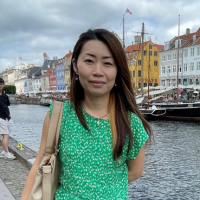 Asato Ikeda is Associate Professor of Art History at Fordham University, New York. She was the Novo Nordisk Guest Professor at the University of Copenhagen (2023-2024) and the co-curator, with Gunhild Borggreen, of In Love & War (Design Museum Danmark, 2024). She is the author of The Politics of Painting: Fascism and Japanese Art during the Second World War (2018), the co-author of A Third Gender: Beautiful Youths in Japanese Prints (2016), and the co-editor of Art and War in Japan and its Empire (2012). She has also published in the journals Transgender Studies Quarterly and modernism/modernity.
Talk by Steffen Kloster Poulsen.
This talk traces the emergence of art photography in Japan, focusing on the decades following World War II, when photography began to radically redefine its relationship to art, documentation, and authorship. Rather than treating photography as a neutral recording device, some Japanese photographers increasingly embraced subjectivity, fragmentation, and ambiguity, leading to heated debates within the photography community.
At the same time, another phenomenon was making headway: the exhibition and selling of individual photographic prints from gallery walls. Until then, photography in Japan had been primarily distributed through photobooks and popular photography magazines. This shift raised fundamental questions: How is art photography different from other forms of photography? And when does a photograph become art?
Through key figures from such as Moriyama Daidō and Hatakeyama Naoya, the talk explores a persistent tension within Japanese photography: a resistance to the label of “artist” even as these photographers are exhibited in major museums and galleries around the world. This ambivalence reflects broader cultural attitudes toward authorship, craft, and the boundaries of fine art.
Bio
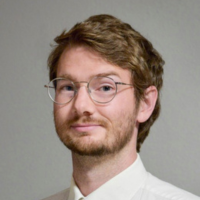 Steffen Kloster Poulsen is an independent researcher, photographer and translator. He holds a BFA in Fine Art Photography from Valand Academy in Gothenburg and an MA in Japan Studies from Copenhagen University. He is the founding editor of Kokon, a micropublisher focused on translated Japanese literature.
Programme
- Welcome and short introduction
- Marta Fanasca, “Yūkaku – Love District: Visual Ethnography, Memory, and Decline in Contemporary Yoshiwara”
- Asato Ikeda, “Visualizing Desire: Japanese Women, Sex Work, and the Global Image of Japan”
- Steffen Kloster Poulsen, “Art, photography, and the emergence of art photography in Japan”
- Reception with drinks and snacks.
Marta Fanasca’s photographs from Yūkaku – Love District will be exhibited in the library of the Faculty of Humanities, University of Copenhagen, from April 13 to May 22, 2026.
The seminar and exhibition is free and open for all.
Sign up for the seminar and exhibition opening.
About the HUM:Global Talks! series
This seminar is part of the HUM: Global Talks! series of Spring 2026. The series consists of talks, seminars, and events at the Humanities at the University of Copenhagen.
Map of South Campus
View directions.
View on map of the Faculty of Humanities - South Campus.
View map of South Campus (pdf).