
Before the Image – The Political Ontology of Image-Making for Legal and Social Justice
Images are central to justice. They expose violence, mobilise publics, and serve as evidence in courts. But what images show – and conceal – depend on design of image technologies as well as camera and visual literacy skills. Therefore, this project investigates what goes into the making of images for legal and social justice before they are taken or seen.
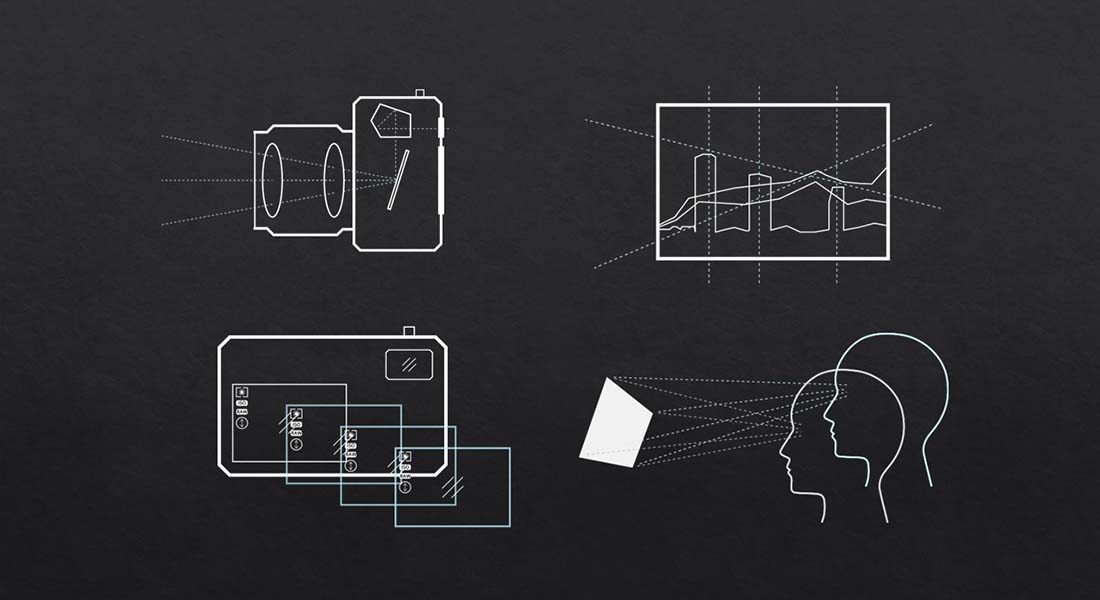 The project moves beyond the situations around the taking and showing of images to investigate processes of designing image technologies and developing camera and visual literacy skills – what the project terms ‘before the image’. That is, the project proposes a fundamental rethinking of the places, people, and times considered part of image-making.
The project is carried out in close collaboration with civil society organisation, Pax Memoria. The field of images for justice is rapidly developing. Through close collaboration with leading civil society actors, the project connects people with practical, technical, and theoretical knowledge to produce shared, relevant, and engaged theorising on the potential of images to serve justice.
Image-capturing devices are in our hands and pockets, attached to buildings, vehicles, and bodies, and above us in the sky. They document violence, war crimes, and human rights abuses in images that are used in trials and for social justice. Despite their promise of truth, images are also recognised as biased, partial, and positioned. However, this has mainly been explored by studying images – or people engaged with taking or viewing them. To understand images for legal and social justice, we must study how biases, partialities, and positionalities of images are produced, not only in relation to taking and viewing images, but also in processes of designing image technologies and developing camera and visual literacy skills – what this project terms before the image. The project works ethnographically, cross-disciplinarily, and collaboratively. It subcontracts civil society actors to explore what goes into the making of images for legal and social justice before they are taken or seen.
The objectives are to:
- Develop a political ontology of image-making that expands conceptualisations of how, when, and by whom images are made. By looking beyond the situations immediately around the capturing and viewing of images, the project broadens understandings of the time, places, and actors involved in image-making.
- Develop and test an innovative methodological approach to ‘studying the future’. By subcontracting and collaborating with key image actors to develop sites for ethnographic exploration, the project gains unique access to the development of emerging image technologies.
- Enhance the capacity of stakeholders to address biases and promote justice. By providing actionable insight into the preconditions of image production, the project empowers civil society organisations, legal institutions, and tech developers to navigate the ethical and practical challenges associated with image making, supporting their work to make images less unjust and more useful for justice.
The overall research question for the project is:
- What goes into the making of images for legal and social justice before they are taken or seen?
This is explored through four interconnected sub-questions that each correspond with a work package:
WP1: Before the camera
RQ1: What are the processes that go into the making of camera equipment, devices, software, and mobile applications, and who are the implicated actors?
WP2: Before the shutter
RQ2: How do political, cultural, economic, and technical affordances, safety considerations, and camera literacy skills inform the ways in which images are taken?
WP3: Before the screen
RQ3: How do informational infrastructures affect various modes of processing and showing images across formats, and how are these infrastructures developed?
WP4: Before the view
RQ4: How does visual literacy, including memory, perceptions of truth and training, impact ways in which images are seen, and how is visual literacy developed?
Working in close collaboration, PI Nina Grønlykke Mollerup will lead WP1, postdoc Azza El-Masri will lead WP2, postdoc Jeff Deutch will lead WP3 while a PhD candidate will lead WP4. Pax Memoria works across all four work packages.
The project is carried out in close collaboration with Pax Memoria. Pax Memoria works to enhance media integrity, rehumanize digital memories on environmental catastrophes in conflict zones, build capacity in media reporting, and support documentation and collective action for climate justice and accountability.
- Alexa Koenig, Research Professor of Law, Co-Faculty Director, Human Rights Center, UC Berkeley
- Sam Dubberley, Director, Technology, Rights & Investigations Division, Human Rights Watch
- Kelly Matheson, Deputy Director, Global Strategy, Our Children’s Trust
People
| Name | Title | Phone | |
|---|---|---|---|
| Cathrine Andrea Norup Pedersen | Student | ||
| Jeff Deutch | Postdoc | +4535334143 | |
| Nina Grønlykke Mollerup | Associate Professor | +4535326079 | |
| Rose Farawati Bach | Student | ||
| Sahil Borse | PhD Fellow | +4535335947 |
Funding

News
-
New PhD Fellow Sahil Borse
2026.09.03 -
New Postdoctoral Researcher Azza El-Masri
2026.08.27 -
New Postdoctoral Researcher Jeff Deutch
2026.08.18 -
"Seven promises and letdowns of urgent image collections of violence: The curse of the archive"
2026.08.13 -
Why do people take out their cameras and film in situations of grave danger?
2026.06.29
Interested in being a student intern in Before the Image? (Danish)
Interesserer du dig for open source investigations og hvordan billeder kan bruges i arbejde for retfærdighed? Og har du mulighed for at have et praktikforløb som del af din uddannelse? Så er det muligt at komme i praktik i Before the Image.
Send en email med en kort beskrivelse af hvilke aspekter af projektet du finder interessante til Nina Grønlykke Mollerup. Skriv også hvilken uddannelse du er i gang med, hvor langt du er og hvad dine muligheder er for at have praktik som del af uddannelsen.
Praktikanter i projektet vil få lov at deltage i forskellige projektbegivenheder og vil få ansvaret for at lave mindre undersøgelser, der fastlægges i samarbejde med projektteamet. Praktikanter vil også få mulighed for at samarbejde med projektets praksispartnere fra civilsamfundet.
This opportunity is for students based in the Copenhagen area who has an option to do an internship as part of their studies. Danish language skills are not necessary.